Brought to you by Penguin.
'Wonderful, mind-broadening... a journey to alternative realities as extraordinary as any you'll find in science fiction' - The Times, Book of the Week
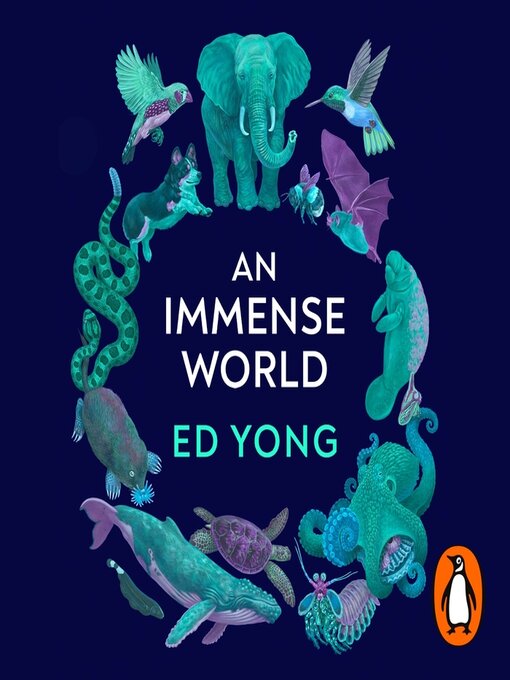
Humans have three or four colour-detecting cones in their retinas. Mantis shrimp have 16. In fact, their eyes seem to have more in common with satellite technology than with biological vision as we currently understand it. They have evolved to track movement with an acuity no other species can match by processing raw information; they may not 'see', in the human sense, at all.
Marine molluscs called chitons have eyes which are made of stone. Scorpions appear to see with their entire bodies. It isn't only vision that differs from species to species - some animals also have senses we lack entirely. Knifefish navigate by electrical charge.
An Immense World will take us on an insider's tour of the natural world by describing the biology, physics and chemistry animals use to perceive it. We may lack some of their senses, but our own super-sense lies in our ability to understand theirs. And in the face of the largest extinction event since the meteor that killed the dinosaurs, our only hope of saving other species is bound up with our ability to see what they see, and feel what they feel.
© Ed Yong 2022 (P) Penguin Audio 2022
- Women's History Month 2026
- New eBook additions
- Women Write Fiction
- Available now
- Most popular
- Childhood Classic eBooks
- Dyslexia
- Unmissable Picture Books
- Try something different
- Crime Doesn't Pay
- Novella & Short Story Classics
- Read-Along
- Stories for Early Readers
- See all ebooks collections
- Women's History Month 2026
- Women Write Fiction
- New audiobook additions
- Interesting Lives: Memoirs & Biographies
- Books on Film
- Try something different
- Available now
- Read by a Celeb
- Most popular
- New kids additions
- New teen additions
- Crime Doesn't Pay
- Popular Audiobooks
- See all audiobooks collections
